While ragi (finger millet) is globally recognized as a premier nutritional powerhouse, achieving the optimal artisanal texture in homemade confectionery requires technical precision. The hallmark of a superior ragi cookie lies in the rigorous calibration of moisture-binding agents and the application of disciplined baking methodologies. This comprehensive compendium serves as an authoritative framework for producing professional-grade ragi cookies, integrating expert culinary insights with versatile health-conscious adaptations and advanced preservation strategies.
Table of Contents
Key Takeaways
- Ragi cookies are homemade biscuits made with finger millet flour and are a healthier alternative to refined flour cookies.
- Homemade ragi cookies provide more fiber, calcium, and essential nutrients than many commercially available cookies.
- Simple ingredients like ragi flour, ghee or butter, jaggery, and baking powder create delicious, wholesome cookies.
- Correct dough consistency and baking temperature are essential for crispy edges and a soft center.
- Healthy variations include eggless, vegan, gluten-free, chocolate, almond, and jaggery ragi cookies.
- Proper storage in an airtight container keeps homemade cookies fresh for up to two weeks.
- Millet-based snacks are an easy way to include nutritious whole grains in everyday diets.
Ragi cookies represent a sophisticated fusion of traditional cereal science and modern confectionery, offering a functional nutrient profile that significantly surpasses conventional wheat-based alternatives.
Finger millet is a heritage grain distinguished by its high concentration of bioavailable calcium, iron, dietary fiber, and essential amino acids. By incorporating this resilient millet into your baking repertoire, you fundamentally enhance the glycemic and micronutrient value of everyday snacks.
For example, replacing part or all of the refined flour with ragi flour significantly improves the nutritional quality of homemade cookies.
According to the Indian Institute of Millets Research (IIMR), finger millet contains one of the highest calcium levels among cereals. — Source: IIMR, 2023
According to FAO, millets are climate-smart crops that support sustainable nutrition worldwide. — Source: FAO, 2023
Quotable Insight: Ragi cookies transform a traditional snack into a nutrient-rich everyday treat.
If you’d like to learn more, explore our [Internal link: “benefits of ragi flour” → Complete Guide to Ragi Nutrition].
Why Should You Make Ragi Cookies at Home Instead of Buying Them?
Adopting a home-based baking approach provides comprehensive oversight regarding ingredient provenance, caloric density, and the elimination of industrial additives.
Commercial formulations frequently utilize hydrogenated lipid systems, synthetic stabilizers, and refined sucrose. In contrast, artisanal preparation allows for the integration of premium unrefined sweeteners like jaggery and organic fats, ensuring a clean-label product tailored to specific dietary requirements.
Benefits include:
- No artificial preservatives
- Less refined sugar
- Higher fiber
- Better calcium intake
- Fresh ingredients
- Kid-friendly nutrition
- Customizable flavors
Research also shows that increasing whole-grain consumption supports healthier dietary patterns. — Source: WHO Healthy Diet Guidelines, 2023
For additional inspiration, browse our [Internal link: “healthy millet recipes” → Healthy Millet Recipe Collection].
The best homemade ragi cookies require only a handful of pantry staples.
Essential Ingredients
| Ingredient | Quantity |
| Ragi flour | 1 cup |
| Whole wheat flour (optional) | ½ cup |
| Butter or ghee | ½ cup |
| Jaggery powder or brown sugar | ½ cup |
| Baking powder | 1 tsp |
| Cardamom powder | ½ tsp |
| Vanilla extract | ½ tsp |
| Milk | 2–3 tbsp |
| Chopped almonds/cashews | Optional |
Using organic ingredients improves both flavor and nutrition.
What Equipment Is Required?
Basic baking equipment is enough to prepare homemade ragi cookies successfully.
You’ll need:
- Mixing bowl
- Measuring cups
- Baking tray
- Oven (or OTG)
- Baking paper
- Spatula
- Rolling pin (optional)
How Do You Make Ragi Cookies Step by Step?
The synthesis of a perfect ragi cookie necessitates a disciplined technical sequence: meticulous sifting of dry particulates, controlled aeration of fats, and precise thermal management.
Step 1: Prepare the Ingredients
Measure every ingredient accurately before beginning.
For example, sift the flour and baking powder together to prevent lumps.
Combine:
- Ragi flour
- Wheat flour
- Baking powder
- Cardamom powder
Mix thoroughly.
Step 3: Cream Butter and Sweetener
Beat butter (or ghee) with jaggery powder until smooth and fluffy.
This step creates lighter cookies.
Step 4: Prepare the Dough
Gradually combine dry ingredients with the butter mixture.
Add milk little by little until a soft dough forms.
Avoid overmixing.
Step 5: Shape the Cookies
Roll small balls and flatten gently.
Alternatively, roll the dough and cut with cookie cutters.
Leave enough spacing between cookies.
Step 6: Bake
Bake at:
- 170–180°C
- 12–15 minutes
Edges should turn golden brown.
Step 7: Cool Completely
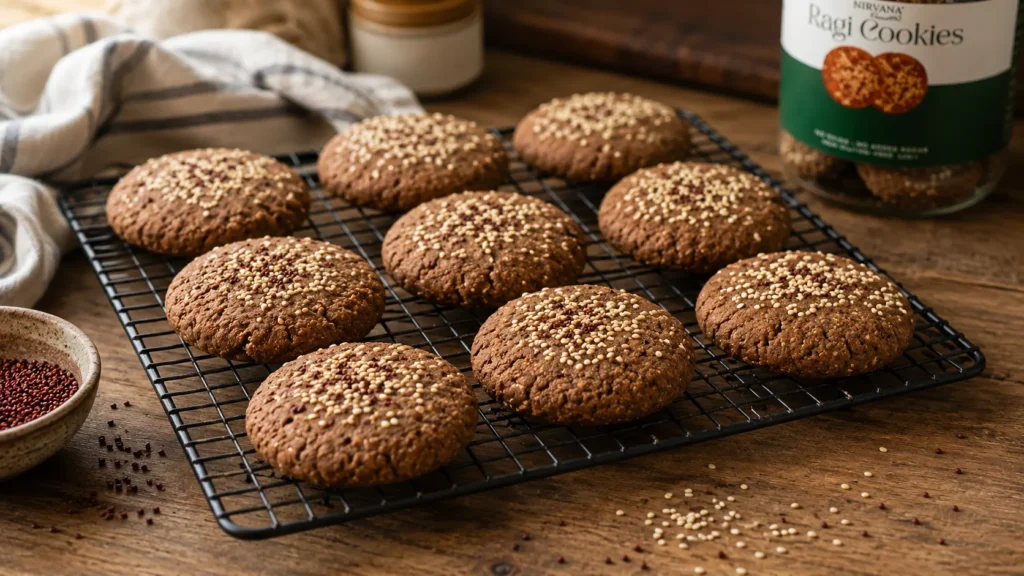
Allow cookies to cool on a wire rack.
Cooling makes them crisp.
Quotable Insight: Proper cooling is just as important as proper baking.
Also read this: What Is Pahadi Mix Salt and Why Is It So Popular? The Ultimate Beginner’s Guide to Authentic Himalayan Seasoning
Can You Make Eggless Ragi Cookies at Home?
Yes, ragi cookies can be made completely eggless without affecting texture.
Butter, milk, and proper dough consistency are sufficient to bind the ingredients.
Many Indian households traditionally prepare eggless cookies this way.
How Can You Make Vegan Ragi Cookies?
Vegan ragi cookies replace dairy ingredients with plant-based alternatives.
Use:
- Coconut oil instead of butter
- Almond milk
- Oat milk
- Coconut sugar
- Vegan chocolate chips
The baking process remains exactly the same.
Can Ragi Cookies Be Made Without Refined Flour?
Yes, ragi cookies can be made entirely without refined flour by using whole-grain alternatives.
Popular substitutes include:
- 100% ragi flour
- Oat flour
- Almond flour
- Sorghum flour
These versions are richer in fiber and minerals.
What Is the Best Sweetener for Homemade Ragi Cookies?
Natural sweeteners improve both nutrition and flavor in homemade ragi cookies.
The best options include:
- Jaggery powder
- Coconut sugar
- Brown sugar
- Date paste
- Honey (for no-bake recipes)
Jaggery remains the most popular choice because it complements ragi’s earthy taste.
Quotable Insight: Jaggery enhances the natural nutty flavor of finger millet.
Structural deficiencies, such as excessive brittleness or dryness, typically arise from suboptimal hydration ratios or prolonged exposure to high-intensity thermal cycles.
Common mistakes include:
- Too much flour
- Too little butter
- Excess baking time
- High oven temperature
- Not measuring ingredients accurately
Expert Baking Tips
✔ Add milk gradually.
✔ Do not overmix.
✔ Bake only until edges brown.
✔ Let cookies cool naturally.
✔ Store immediately after cooling.
Also read this: Rhododendron Tea Benefits: The Ultimate Guide to Himalayan Wellness, Nutrition & Safe Daily Use
What Are the Best Variations of Homemade Ragi Cookies?
Homemade ragi cookies can easily be customized with nutritious ingredients and exciting flavors.
Popular variations include:
Chocolate Ragi Cookies
Add cocoa powder and dark chocolate chips.
Almond Ragi Cookies
Mix chopped almonds into the dough.
Jaggery Ragi Cookies
Replace sugar completely with jaggery.
Gluten-Free Version
Use only ragi flour and certified gluten-free baking powder.
Kids’ Favorite
Add raisins, chocolate chips, or vanilla.
Protein Version
Add almond flour and flaxseed powder.
Quotable Insight: Small ingredient swaps can create entirely new cookie recipes.
Are Ragi Cookies Good for Kids and Diabetics?
When formulated with high-stability fats and low-glycemic sweeteners, ragi cookies function as an exceptional nutritional vehicle for both pediatric and specialized adult diets.
For children, homemade cookies offer whole grains without artificial preservatives.
For people managing diabetes, using jaggery in moderation does not make a food sugar-free, so portion control remains important. Choosing less sweet versions with added nuts or seeds may help create a more balanced snack, but individual dietary needs vary. Always follow advice from a qualified healthcare professional.
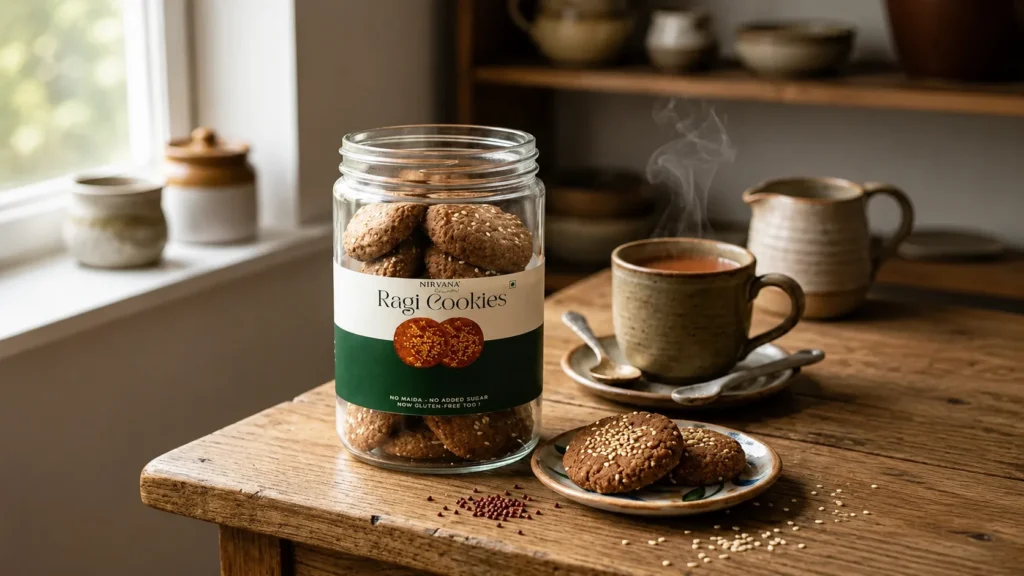
How Should You Store Homemade Ragi Cookies?
Maintaining the structural integrity and organoleptic qualities of homemade ragi cookies requires controlled atmospheric storage.
Storage tips:
- Cool completely
- Store in an airtight container
- Keep away from moisture
- Avoid refrigeration unless necessary
Shelf life:
| Storage Method | Freshness |
| Airtight container | Up to 2 weeks |
| Refrigerator | Up to 1 month |
| Freezer | Up to 3 months |
Serve with:
- Masala chai
- Green tea
- Coffee
- Warm milk
They’re also excellent lunchbox snacks.
Tools & Practical Baking Application
Simple kitchen tools make baking homemade ragi cookies easier and more consistent.
Recommended tools:
- Measuring cups
- Digital kitchen scale
- Silicone baking mat
- Cooling rack
If you’re looking for quality ingredients, Nirvana Organic’s organic pantry range can help you bake with wholesome staples, while local grocery stores and trusted organic brands are also good options.
Free alternatives include:
- Printable measurement charts
- Oven thermometer
- Basic kitchen timer
Also read this: How to Make Turmeric Powder for Face at Home: The Ultimate Step-by-Step Guide for Naturally Glowing Skin
What’s Next After Learning How to Make Ragi Cookies at Home?
Once you’ve mastered homemade ragi cookies, you can explore more healthy millet recipes and whole-grain baking ideas.
Next recipes to try:
- Millet muffins
- Ragi pancakes
- Finger millet laddoos
- Healthy breakfast cookies
- Oatmeal millet biscuits
Continue exploring our [Internal link: “healthy breakfast recipes” → Healthy Breakfast Collection] for more wholesome meal ideas.
Conclusion
Mastering the art of ragi cookie preparation represents a significant step toward integrating functional whole grains into a modern lifestyle without compromising culinary excellence. By leveraging the synergy of finger millet flour and unrefined ingredients, you can consistently produce snacks that are both nutritionally robust and palatably superior.
Experiment with different variations, share your creations with loved ones, and build a pantry filled with nourishing ingredients. If you’re looking for high-quality organic baking essentials, explore [Internal link: “organic pantry essentials” → Organic Grocery Collection]. You can also discover more recipes in our [Internal link: “homemade biscuits recipe collection” → Healthy Biscuit Roundup].
Written by
Nirvana Organic Editorial Team
Nutrition-focused recipe writers and organic food specialists passionate about healthy Indian cooking, millet-based recipes, and sustainable living.
Reviewed by
Nirvana Organic Nutrition & Wellness Team
Experts in wholesome ingredients, traditional foods, and evidence-informed nutrition content.