You have likely seen the deep red buransh squash on shelves during a Himalayan trip or heard locals praise its refreshing taste. However, few people realize what makes this rhododendron-flower drink nutritionally unique—or how it compares to everyday fruit squashes. In this guide, we will explore exactly what is inside a glass of buransh squash and why it belongs in your pantry.
Key Takeaways
- Buransh squash is made from the Himalayan rhododendron flower (Rhododendron arboreum) and is naturally rich in antioxidants and vitamin C.
- The drink’s red-pink color comes from anthocyanins, plant compounds linked to anti-inflammatory and heart-protective effects.
- A typical serving of buransh squash provides meaningful vitamin C content, supporting immune function.
- Unlike many commercial squashes, traditional buransh squash contains no artificial colors when made using authentic methods.
- Regular moderate consumption may support skin health and antioxidant defense due to its polyphenol content.
- Reading the ingredient label for added sugar and preservatives is essential to preserving the drink’s natural nutritional profile.
- Buransh squash pairs nutritional value with cultural heritage, rooted in centuries of Himalayan usage.
What Is Buransh Squash Made From?
Buransh squash is a concentrated fruit drink prepared from the petals of the Rhododendron arboreum tree, a flowering species native to the mid-to-high altitude forests of Uttarakhand and Himachal Pradesh. The bright red flowers are harvested each spring, boiled to extract their juice, and blended with sugar and water to create a tart, floral squash. Traditional producers avoid synthetic dyes because the flower's natural anthocyanin pigments already provide its signature crimson hue. For readers curious about the plant's other preparations, [Internal link: "rhododendron tea and its antioxidant benefits" → Buransh tea antioxidants article] covers how the same flower is used in a lighter, brewed format.
Commercial buransh production is significant enough to be economically meaningful for hill communities. Buransh squash and juice production can reach 4,000–5,000 liters per flowering season in a single processing unit — Source: International Journal of Scientific Research, 2022. That scale shows this isn’t a fringe artisanal product; it’s a growing regional industry.
Why Does the Nutritional Value of Buransh Squash Matter?
The nutritional value of buransh squash matters because it offers a naturally derived alternative to synthetic, sugar-heavy commercial squashes. Most mass-market fruit squashes rely on added colors, artificial flavoring, and minimal actual fruit content. Buransh squash, by contrast, is built around a flower extract that independently carries vitamin C, anthocyanins, and phenolic compounds. This makes it appealing to health-conscious buyers who want flavor without sacrificing nutrition, echoing why [Internal link: “why rhododendron flower products are trending” → Rhododendron products trend article] has become a wider consumer movement in recent years.
What Vitamins and Minerals Does Buransh Squash Contain?
Buransh squash contains a distinct mineral and vitamin profile drawn directly from the rhododendron flower. Laboratory analysis of rhododendron flower extract beverages recorded ascorbic acid (vitamin C) levels of roughly 0.28 to 1.43 mg per 100 ml, alongside measurable phenolic content — Source: Academia.edu Biochemical Analysis Study, 2023. In addition, the flowers themselves are known sources of potassium, calcium, iron, zinc, and copper. These minerals support everyday functions like electrolyte balance, oxygen transport, and immune signaling. For a comparison point from another Himalayan staple, see [Internal link: “Himalayan Rajma health benefits” → Himalayan Rajma article], which covers mineral density in a different traditional food.
Is Buransh Squash Good for Immunity?
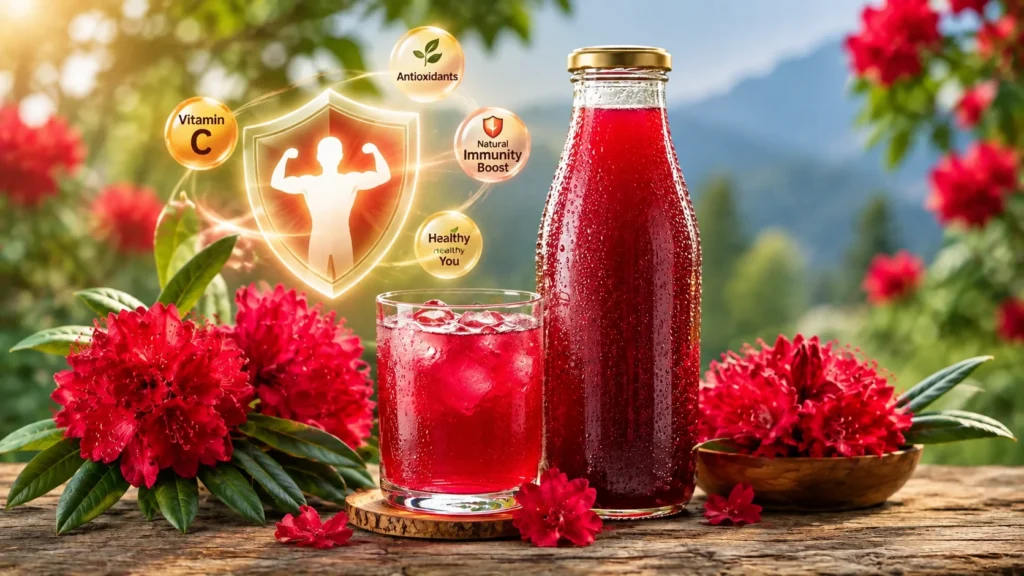
Yes, buransh squash can support immune function due to its vitamin C and antioxidant content. Vitamin C is a well-documented cofactor in white blood cell activity and collagen synthesis, both of which are central to immune defense. Buransh flowers are considered an excellent natural source of this nutrient in traditional Himalayan diets, which is part of why locals have historically consumed the drink during seasonal transitions. That said, the vitamin C level in a diluted squash serving is modest compared to citrus fruit; therefore, it should be treated as a supportive addition rather than a primary vitamin C source.
How Many Calories Are in a Serving of Buransh Squash?
A typical 30 ml serving of buransh squash, diluted with water, generally falls in the range of 60–90 calories, driven mainly by added sugar rather than the flower extract itself. Buransh flower extract is naturally low in fat and protein, so its calorie contribution comes almost entirely from sugars. This is an important distinction for anyone tracking intake: the base ingredient is light, but preparation method determines the final calorie count.
Also Read This: The Ultimate Guide to the Benefits of Apple Cider Vinegar on an Empty Stomach
What Are Anthocyanins and Why Do They Matter in Buransh Squash?
Anthocyanins are the plant pigments responsible for the deep red-pink color of buransh flowers and, by extension, buransh squash. Studies measuring rhododendron flower extract found anthocyanin levels between roughly 6.33 and 9.68 mg per 100 ml of drink — Source: Academia.edu Biochemical Analysis Study, 2023. These compounds are linked in nutrition research to antioxidant and anti-inflammatory activity, similar to the pigments found in berries and red grapes. Because anthocyanins are heat- and light-sensitive, squash stored in glass bottles under refrigeration retains them better than squash left in plastic at room temperature.
How Does Buransh Squash Compare to Regular Fruit Squash Nutritionally?
| Nutritional Factor | Buransh Squash | Typical Commercial Fruit Squash |
| Color source | Natural anthocyanins | Often artificial dyes |
| Vitamin C | Present from flower extract | Sometimes fortified synthetically |
| Antioxidant compounds | Anthocyanins, phenolics, flavonoids | Minimal to none |
| Sugar content | Depends on recipe, often moderate | Frequently high |
| Preservatives | Absent in traditional recipes | Common (sodium benzoate, etc.) |
As the table shows, buransh squash generally offers more naturally occurring bioactive compounds than a standard commercial squash. For readers comparing it against another regional legume-based staple, [Internal link: “Munsiyari Rajma nutritional profile” → Munsiyari Rajma article] provides a useful side-by-side on protein-rich Himalayan foods.
What Is the Best Way to Drink Buransh Squash for Health Benefits?
The best way to drink buransh squash is diluted at roughly a 1:4 or 1:5 ratio with water, which preserves flavor while moderating sugar intake per glass. Many households pair it with a drizzle of [Internal link: “forest honey traditional uses in Ayurveda” → Forest honey article] instead of extra sugar for a naturally sweetened version. Drinking one glass a day, ideally chilled during warmer months, is a common traditional serving pattern in Himalayan households. Avoid boiling the diluted squash, since heat can degrade both vitamin C and anthocyanin content.
Does Buransh Squash Have Any Side Effects?
Buransh squash is generally safe in moderate amounts; however, excessive consumption of concentrated flower extract has been associated with mild digestive discomfort in some traditional accounts. Individuals with known pollen sensitivities or those on blood sugar medication should examine ingredient labels closely, as natural sugar content varies by brand. As with any concentrated plant extract, moderation is the recommended approach.
How Should You Choose a High-Quality Buransh Squash?
Choosing a high-quality buransh squash starts with checking the ingredient label for real rhododendron flower extract listed near the top, not as a minor flavoring. Look for squash without artificial colors, since authentic anthocyanin pigmentation should already provide the red hue. Preservative-free, small-batch options typically retain more of the flower’s antioxidant profile than mass-produced alternatives. You can [Internal link: “shop Nirvana Organic Buransh Squash” → Buransh squash product page] to compare a preservative-free option directly.
Can Buransh Squash Be Part of a Daily Diet?
Buransh squash can be part of a daily diet when consumed in moderate, diluted servings as a complement to — not a replacement for — whole fruits and vegetables. It works well alongside other traditional Himalayan pantry staples like [Internal link: “Pahadi Mix Salt for everyday Himalayan cooking” → Pahadi Mix Salt page] as part of a broader regional-foods approach to eating. Pairing it occasionally with [Internal link: “turmeric powder health benefits” → Turmeric article] in warm water is another traditional combination for antioxidant support.
What’s Next: Bringing Buransh Squash Into Your Routine
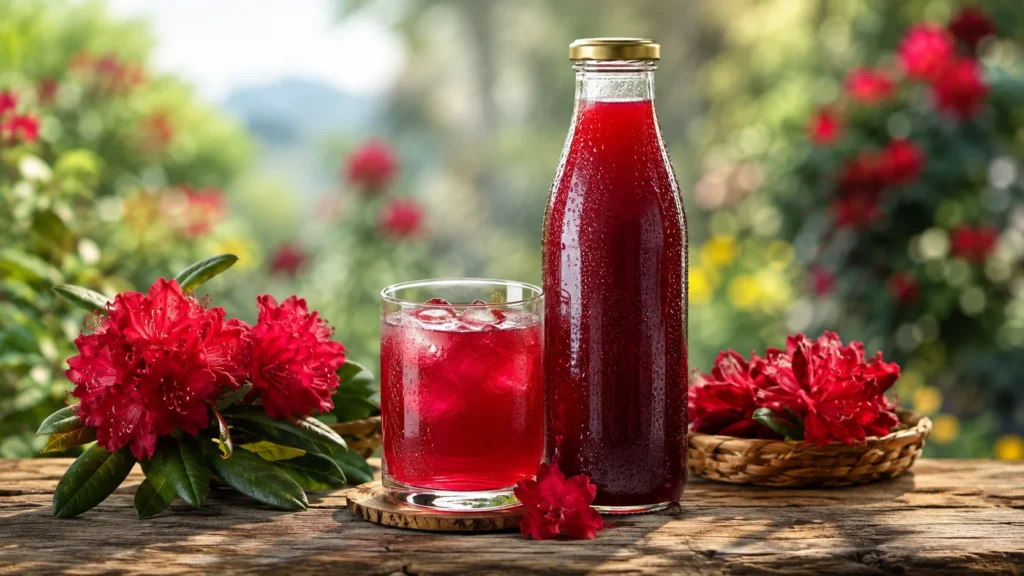
If you’re ready to try buransh squash, start by sourcing a preservative-free version and testing your preferred dilution ratio. Keep the bottle refrigerated once opened to protect its anthocyanin and vitamin C content. Consider rotating it with other Himalayan staples like [Internal link: “Pahadi Garlic Salt for traditional recipes” → Pahadi Garlic Salt page] to build a pantry rooted in traditional nutrition rather than processed convenience foods.
Conclusion
Buransh squash unites centuries of Himalayan tradition with a genuinely beneficial nutritional profile—vitamin C, anthocyanins, minerals, and naturally derived color, all from a single mountain flower. While it is not a miracle cure, it serves as a mindful and nutritious alternative to synthetic squashes. The next time you reach for a drink mix, consider choosing this Himalayan classic.
Written by Nirvana Organic Editorial Team, specialists in Himalayan wellness and traditional nutrition content.
Reviewed by [Amit Kumar], Nutrition Consultant with expertise in traditional and regional food systems.