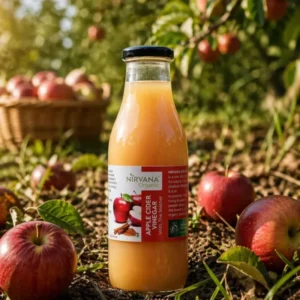
You may have heard that apple cider vinegar (ACV) can transform dull, product-laden hair into a shinier, healthier mane. However, few understand the science of how it interacts with the scalp or the precise dilution ratios required for safety. Using it incorrectly can cause irritation or damage. This comprehensive guide details the mechanics of ACV hair care, offering a step-by-step methodology and essential precautions for an effective natural rinse.
Table of Contents
Key Takeaways
- Apple cider vinegar is a fermented liquid made from crushed apples, valued in hair care for its natural acidity and residue-removing properties.
- Raw, unfiltered ACV containing “the mother” retains beneficial enzymes and bacteria that filtered versions strip away.
- ACV hair rinses work by lowering scalp pH, which helps close the hair cuticle, reduce frizz, and add natural shine.
- A safe ACV rinse typically uses a diluted ratio of 1–2 tablespoons of vinegar per cup of water, applied after shampooing.
- Regular but moderate use, generally once or twice a week, removes product buildup without over-drying the scalp.
- People with color-treated, chemically processed, or highly sensitive scalps should patch test before regular use.
- ACV is a low-cost, natural complement to a broader chemical-free hair routine—not a standalone cure-all.
What Is Apple Cider Vinegar, and How Does It Work on Hair?
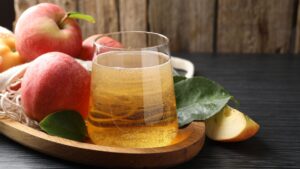
Apple cider vinegar is a fermented liquid produced by crushing apples, introducing yeast to the juice, and allowing bacteria to convert natural sugars into acetic acid. This fermentation process results in ACV’s characteristic aroma and its potent, pH-lowering properties. In hair care, the acetic acid content is the primary active agent, gently dissolving mineral deposits and product residue that accumulate on the hair shaft.
Raw, unfiltered ACV—distinguishable by the presence of “the mother”—is superior to the clear, filtered varieties typically found in grocery stores. The mother is a complex web of beneficial enzymes, proteins, and bacteria that is removed during the filtration and pasteurization process. Because raw ACV retains these natural compounds, it is the preferred choice for holistic hair care routines over distilled white vinegar or highly processed ACV.
For more on sourcing a truly unprocessed bottle, see our guide on raw unfiltered apple cider vinegar with the mother.
Why Does Scalp pH Matter for Healthy Hair?
Scalp pH is a critical factor in hair health; hair is most resilient in its naturally acidic state. Disrupting this balance can lead to frizz, dullness, and cutaneous irritation. Human hair typically maintains a pH of 3.5–4.5, while the scalp itself is slightly less acidic at approximately pH 5.5 (Source: International Journal of Trichology, 2014). Unfortunately, most commercial shampoos, hard water, and styling products are alkaline, pushing the scalp away from its ideal equilibrium.
That shift matters mechanically. An alkaline pH increases the negative electrical charge on the hair fiber’s surface, which raises friction between strands and can lead to cuticle damage over time—Source: International Journal of Trichology, 2014. Shower water itself is often alkaline, typically ranging from pH 6.5 to 8.5, while many hair colorants sit between pH 8.5 and 11—Source: Capilclinic, 2024. As such, hair exposed to daily washing, color treatments, or hard water tends to drift alkaline, leaving the cuticle lifted and rough.
This is precisely where the acidic nature of ACV provides value. By reintroducing a mildly acidic rinse, you can return the hair and scalp to their natural pH range, encouraging the hair cuticle to lie flat. A smooth, sealed cuticle reflects light more efficiently, which is the mechanism behind the characteristic gloss observed after an ACV rinse.
Also Read This: The Ultimate Guide to the Benefits of Apple Cider Vinegar on an Empty Stomach
Can Apple Cider Vinegar Really Help with Dandruff?
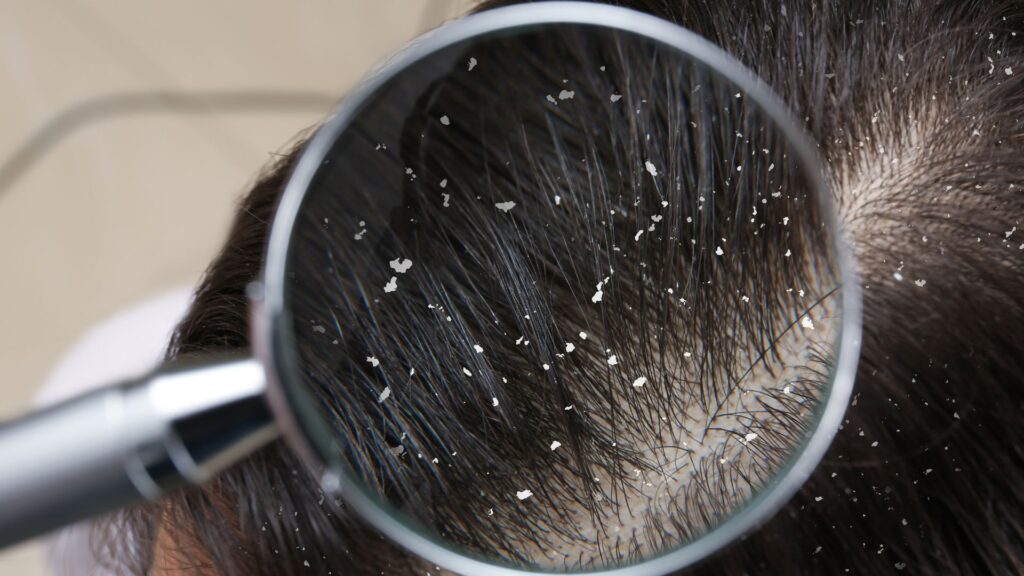
Apple cider vinegar can help with dandruff because its acetic acid content has measurable antimicrobial and antifungal effects on the yeast most commonly linked to flaking. Dandruff affects roughly half the global population at some point, making it one of the most common scalp conditions worldwide—Source: StatPearls, 2024. Much of it is driven by Malassezia, a yeast that thrives on scalp oils and triggers inflammation when it overgrows.
Laboratory research indicates that acetic acid can inhibit the growth of Malassezia furfur, as an acidic environment is generally inhospitable to this yeast. However, it is important to note that most clinical evidence involves concentrated solutions rather than home dilutions. For consumer use, ACV’s efficacy is both mechanical and antimicrobial: it assists in rinsing away flakes while discouraging further fungal activity, acting as a preventative maintenance tool rather than a primary medical treatment.
For persistent or severe dandruff, ACV works best as a complement to—not a replacement for—proven treatments like zinc pyrithione or ketoconazole shampoos.
How Do You Make an Apple Cider Vinegar Hair Rinse at Home?
Making an ACV hair rinse is simple: dilute raw, unfiltered vinegar with water, apply it after shampooing, then rinse it out after a few minutes. Here’s the full step-by-step method:
- Shampoo as normal and rinse thoroughly.
- Mix the rinse—combine your diluted ACV solution in a bowl or spray bottle.
- Apply from scalp to ends, focusing on areas with the most product buildup.
- Massage gently into the scalp for 30–60 seconds to loosen residue.
- Let it sit for 2–3 minutes.
- Rinse thoroughly with cool or lukewarm water.
- Follow with conditioner if your hair tends toward dryness.
[Insert image: Diluted ACV rinse being poured into a spray bottle | Alt text: “Prepare an apple cider vinegar hair rinse at home”]
What Is the Correct Dilution Ratio for ACV Hair Rinses?
For most hair types, the optimal dilution ratio is 1–2 tablespoons of raw ACV per 1 cup (240 ml) of water. This concentration is effective for removing buildup without stripping essential natural oils. Individuals with fine or color-treated hair should utilize the lower end of this range, while those with thicker hair or significant product accumulation may benefit from a slightly higher concentration.
| Hair/Scalp Type | ACV-to-Water Ratio | Frequency |
| Fine or color-treated hair | 1 tbsp: 1 cup water | Every 2–3 weeks |
| Normal, non-sensitive scalp | 1–2 tbsp: 1 cup water | Once weekly |
| Oily scalp / heavy product buildup | 2 tbsp: 1 cup water | Once or twice weekly |
| Very dry or sensitive scalp | 1 tbsp: 2 cups water | Every 3–4 weeks, with a patch test |
Never apply undiluted ACV directly to the scalp. Undiluted vinegar is acidic enough to irritate skin and, with repeated use, can damage the hair cuticle rather than smooth it.
How Often Should You Use Apple Cider Vinegar on Your Hair?
Most individuals achieve optimal results by performing an ACV rinse once or twice per week. This frequency effectively manages buildup without causing excessive dryness. However, application should be adjusted based on hair type and environmental factors. For instance, those living in hard-water areas may require weekly application, whereas individuals with dry or sensitive scalps may only require a rinse every few weeks.
At the same time, watch for signs of overuse—tightness, flaking, or unusual dryness—as cues to scale back. Plus, pairing ACV rinses with a hydrating routine, like our A2 cow ghee for skin and hair care guide, helps balance out any drying effect from more frequent use.
Is Apple Cider Vinegar Safe for Color-Treated Hair?
Apple cider vinegar is generally safe for color-treated hair, provided it is used with more caution than on untreated hair. Chemical treatments increase hair porosity and alkalinity; consequently, a highly concentrated ACV rinse may accelerate pigment loss, particularly with semi-permanent or vibrant dyes.
For color-treated hair, stick to the most diluted ratio (1 tablespoon per 1 cup of water), rinse for a shorter contact time, and space applications out to every two to three weeks. This preserves the smoothing, shine-boosting benefit while minimizing fade risk.
What Are the Side Effects of Using Too Much ACV on Hair?
Excessive use of apple cider vinegar can lead to scalp dehydration, irritation, and, in rare instances, mild chemical burns if undiluted vinegar is applied. Because acetic acid is a chemical compound, frequent exposure at high concentrations can strip sebum faster than it can be replenished, resulting in brittle hair. If you notice redness or unusual dryness, suspend use and reintroduce the rinse at a lower concentration.
For example, someone who swaps their weekly rinse for a daily one may notice increased frizz and flaking within a few weeks—the opposite of the intended effect. If irritation, redness, or excessive dryness appears, pause use for one to two weeks and reintroduce it at a lower concentration.
Does Apple Cider Vinegar Help Hair Grow Faster?
Apple cider vinegar does not directly stimulate hair growth, but by removing buildup and supporting a balanced scalp environment, it can indirectly support the conditions healthy hair growth needs. A clean, non-inflamed scalp with healthy pH is simply a better environment for follicles to function normally.
That said, no clinical evidence currently shows ACV outperforms established growth treatments. It’s best framed as scalp maintenance rather than a growth serum.
What’s the Difference Between Raw and Filtered Apple Cider Vinegar for Hair Use?
The main difference between raw and filtered apple cider vinegar is the presence of “the mother,” the cloudy strand of enzymes and bacteria that raw versions retain and filtered versions remove. Filtered ACV is clearer and shelf-stable but loses some of the enzymatic activity naturally present after fermentation.
For hair rinses specifically, either type will lower pH effectively, since the acidity comes from the acetic acid itself, not the mother. However, most natural hair care routines favor raw, unfiltered ACV for its closer-to-source composition and its alignment with a broader clean-beauty philosophy.
Tools and Products You’ll Need
Building an effective ACV rinse routine doesn’t require much. At minimum, you’ll want:
- Raw, unfiltered apple cider vinegar with the mother—the base ingredient
- A spray bottle or squeeze applicator: for even, controlled application
- A measuring spoon or cup: to keep dilution ratios consistent
- A wide-tooth comb: to help distribute the rinse through longer hair

Some routines also pair the rinse with complementary natural ingredients like aloe vera gel for extra hydration or a few drops of essential oil for scent, since plain ACV has a noticeable vinegar smell that fades once hair dries.
Also read these blogs
The Ultimate Guide to A2 Cow Ghee for Skin and Hair Care
The Rise of Rhododendron: Understanding the Himalayan Buransh Wellness Trend
Nutritional Value of Buransh Squash: The Complete Himalayan Superfood Guide
What’s Next: Building a Natural Hair Care Routine Around ACV
Once an ACV rinse becomes part of your routine, the next step is building the rest of your hair care around the same low-chemical philosophy. Consider rotating in a sulfate-free shampoo, a weekly nourishing oil treatment, and mineral-rich ingredients that support the scalp between rinses.
For a fuller routine, explore our guide to natural hair care remedies or pair your ACV rinse with forest honey in Ayurveda for skin and hair benefits for added moisture on drier weeks.
Conclusion
While apple cider vinegar is not a universal remedy, it is a highly effective and economical tool when used correctly. By adhering to proper dilution ratios and monitoring your scalp’s response, you can successfully leverage ACV to eliminate buildup and restore natural radiance. Always begin with a gentle dilution, perform a patch test if you have sensitive skin, and adjust your routine to suit your unique hair needs.
Written by Team Nirvana Organic—writers focused on Himalayan and Ayurvedic wellness ingredients, natural beauty routines, and clean, low-chemical living.
Reviewed by a dermatology-trained wellness consultant specializing in scalp health and natural hair care formulations.