While honey is widely recognized as a natural alternative to refined sugar, its role in Ayurveda is far more profound. Viewed as a potent therapeutic agent, honey is governed by a sophisticated system of classification and usage protocols. This guide elucidates the role of forest honey within Ayurvedic tradition, detailing its intended applications according to ancient wisdom.
Table of Contents
Key Takeaways
- Forest honey is a raw, unadulterated substance harvested from wild bee colonies, distinguishing it fundamentally from processed commercial varieties.
- Classified as Madhu, honey is esteemed in Ayurveda as one of nature’s most efficacious substances due to its diverse healing properties.
- Classical texts categorize honey into multiple types, each defined by distinct flavor profiles, potencies, and clinical applications.
- In traditional formulations, honey serves as an anupana—a catalyst that amplifies the bioavailability and efficacy of herbal preparations.
- When administered correctly, raw forest honey is instrumental in promoting digestive health, bolstering immunity, and enhancing respiratory function.
- Ayurvedic principles strictly advise against the heating of honey, as thermal exposure is believed to compromise its intrinsic therapeutic integrity.
- The selection of unprocessed, sustainably harvested honey is vital for maintaining the biological qualities associated with genuine Ayurvedic benefits.
Defining Forest Honey: Distinctions from Commercial Varieties
Forest honey is a raw, unrefined product obtained from wild bee colonies that forage across a diverse range of forest flora. This stands in stark contrast to managed hives typically restricted to monocultural crops. This distinction is critical; because forest honey derives from a broad spectrum of nectars, it possesses a more sophisticated flavor profile and a superior nutrient density. For instance, honey harvested from the Himalayan foothills may integrate the essence of rhododendron, wild herbs, and various forest blossoms within a single batch.
In contrast, commercial honey often undergoes heating and filtration and may be blended with syrups to achieve standardized consistency. Such processing depletes the enzymes and volatile compounds that Ayurveda identifies as central to honey’s medicinal value. Within the framework of Ayurvedic dietary classification, raw, unheated Madhu is the only form recognized as retaining its comprehensive traditional properties.
This philosophy of minimal interference extends to other traditional Himalayan staples, which are handled with rigorous adherence to their natural state to preserve their nutritional integrity.
The Significance of Madhu in Ayurvedic Science
Honey occupies a unique position in Ayurveda due to its ability to balance all three doshas—Vata, Pitta, and Kapha—depending on its application. This versatility distinguishes Madhu from most substances, which usually target only specific constitutions. This adaptogenic quality is attributed to honey’s complex rasa (taste), combining natural sweetness with a subtle, yet potent, astringent finish.
Furthermore, honey is revered for its yogavahi property—the capacity to permeate deep bodily tissues and transport the attributes of other medicinal substances. When integrated with herbal decoctions, honey facilitates the delivery of active compounds to targeted tissues with greater efficiency. This functional synergy is why honey remains a cornerstone of classical Ayurvedic prescriptions. For further insights into these principles, refer to our comprehensive guide on Ayurvedic wellness routines.
What Are the Different Types of Honey According to Ayurvedic Texts?
Foundational Ayurvedic texts, such as the Charaka Samhita and Sushruta Samhita, delineate various types of honey based on the bee species and floral source. Each variety is assigned specific therapeutic indicators, demonstrating that ancient practitioners viewed honey not as a monolithic ingredient, but as a specialized medical tool.
| Classification Basis | Examples Described in Texts | Attributed Qualities |
| Bee species / source | Makshika, Bhramara, Kshaudra, Pauttika | Varying potency, taste, and suitability for specific doshas |
| Season of collection | Spring vs. autumn-harvested honey | Differences in lightness, warming or cooling effect |
| Floral origin | Forest wildflower honey vs. single-crop honey | Broader nutrient range attributed to multi-floral forest honey |
Historical texts emphasize that honey must be tailored to an individual’s specific constitution. Consequently, multi-floral forest honey, characterized by its minimal processing, is often regarded as the superior choice, aligning most closely with the ideals established in these ancient classifications.
Why Is Honey Called an Anupana in Ayurvedic Medicine?
Honey is designated as an anupana because it serves as a sophisticated delivery system, optimizing the absorption and physiological impact of herbal medicines. An anupana acts as a vehicle that is co-administered with a remedy to facilitate its intended therapeutic outcome. For instance, a bitter-tasting herb may be paired with honey not merely for palatability but to enhance its clinical effectiveness according to Ayurvedic principles.
This application transcends simple sweetening; as an anupana, honey’s role is primarily functional, utilizing its yogavahi property to ensure systemic delivery. Historically, practitioners have utilized honey in conjunction with Ayurvedic immunity boosters, reinforcing its status as both a primary remedy and an essential adjuvant.
What Are the Traditional Ayurvedic Uses of Forest Honey?
The traditional applications of forest honey encompass digestive optimization, immune modulation, wound management, and respiratory health. Its digestive utility is particularly prominent; raw honey is traditionally consumed upon waking to ignite agni, the digestive fire. A common practice involves the administration of raw forest honey in lukewarm water to prepare the metabolism.
Topically, honey has been utilized in wound care for its natural antimicrobial properties, while its oral administration with warm liquids provides respiratory comfort during seasonal transitions. A 2022 review in the Journal of Ayurveda and Integrative Medicine confirms that raw honey preserves enzymatic and antioxidant profiles that are lost during thermal processing.
Why Does Ayurveda Recommend Not Heating Honey?
Ayurveda maintains a strict prohibition against heating honey, as thermal exposure is believed to transform its beneficial compounds into ama, or metabolic toxins. This is among the most enduring tenets of Ayurvedic science, cited consistently across classical literature. For example, adding raw honey to boiling beverages is discouraged, whereas integration into warm water is deemed therapeutic.
Modern biochemistry aligns with this traditional wisdom: heating honey above critical temperatures degrades vital enzymes such as diastase and diminishes its antioxidant capacity. Research indicates that honey heated beyond 140°F suffers a significant loss in natural enzyme activity. This convergence of traditional caution and empirical evidence underscores the validity of the unheated usage protocol.
How Does Forest Honey Support Digestion and Immunity?
Forest honey facilitates digestive and immune health through its concentration of raw enzymes and its role in metabolic stimulation. Raw honey contains trace antioxidants and active enzymes that are absent in its processed counterparts—components that Ayurveda associates with superior nutrient assimilation. Incorporating raw forest honey into a morning routine is a time-honored method for optimizing digestive function.
In the context of immunity, forest honey is most effective when combined with synergistic herbs like turmeric; detailed protocols can be found in our guide to Ayurvedic immunity boosters. Globally, approximately 300,000 metric tons of raw honey are consumed annually for therapeutic purposes, reflecting a widespread commitment to honey as a wellness agent.
How Can You Use Forest Honey the Ayurvedic Way at Home?
Implementing Ayurvedic honey protocols at home requires a commitment to raw, unheated preparations. The most efficacious method is a single serving of raw honey dissolved in lukewarm water, taken upon waking. Some individuals enhance this practice by incorporating traditional Himalayan spices or rhododendron squash for targeted seasonal support.
Honey should also be viewed as a functional anupana for herbal powders, prioritizing its medicinal properties over its flavor. While honey is an excellent alternative to refined sugars, Ayurveda advises mindful consumption, treating it as a potent substance that is most beneficial when used in moderation.
How Do You Identify Genuine, High-Quality Forest Honey and Is It Safe Daily?
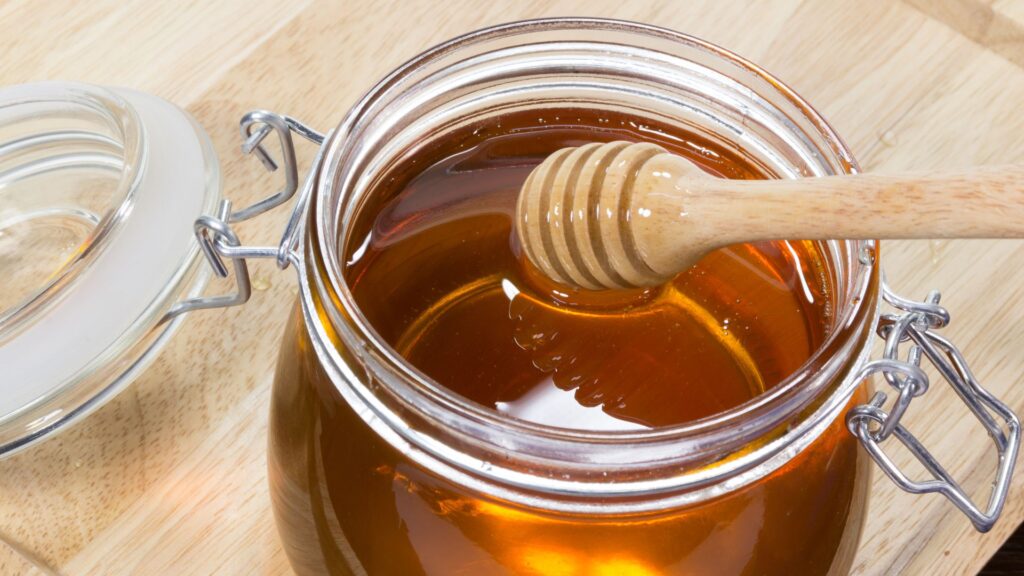
High-quality forest honey is characterized by its distinct texture, natural crystallization patterns, and transparent sourcing. Genuine raw honey will inevitably crystallize over time, a phenomenon rarely seen in highly processed varieties. For instance, authentic forest honey may become granular during colder months, which serves as a hallmark of its unrefined state.
Ethical sourcing is paramount; honey from sustainable forest ecosystems preserves the multi-floral character essential to Ayurvedic efficacy. However, it is important to note that honey is contraindicated for infants under one year. Additionally, individuals with diabetic conditions should seek professional consultation before regular use, as even raw honey is a concentrated source of natural sugars.
Exploring More Traditional Himalayan Foods
Forest honey serves as a gateway to a broader ecosystem of traditional Himalayan nutrition. Staples such as Himalayan Rajma and Bhatt embody the same principles of minimal processing and ancestral wisdom. Integrating forest honey with antioxidant-rich rhododendron tea represents a sophisticated approach to merging traditional forest-sourced ingredients with contemporary wellness practices.
Conclusion
Forest honey is a therapeutic cornerstone in Ayurveda, recognized as Madhu—a substance governed by specific rules of administration and ancient clinical wisdom. By prioritizing raw, unheated honey, you align your daily wellness habits with a centuries-old tradition of natural healing. Commencing your journey with a single serving in warm water each morning is a simple yet profound step toward holistic health.
Written by the Nirvana Organic Content Team, specialists in traditional Himalayan foods and Ayurvedic-inspired wellness content.
Reviewed by an Ayurvedic wellness consultant with expertise in classical food classification and traditional dietary practices.